July 1, 2010

Why eBook Publishing is popular to Publishers!

I discovered something really amazing recently! Why are former REAL publishers going into eBook publishing? Well its simple from their prospective and more lucrative. There are thousands of wanna be writers who think they have the BEST idea but normal publishing houses, tell them ideas are 10 a penny. The editors are right. They are 10-a-penny. But to a wanna be writer they are upset to learn this so they go the route of self publishing. Its hard work to self-publish! Firstly the eBook publisher doesn't have to do the editing or the touting. The WRITER has to do it. Most eBook publishers CHARGE you for that privilege. HELLO are you guys nuts!! You can BUY a program to self-publish, why PAY for this privilege considering you will have to do the hard work yourself in the long run. Therefore YOU are paying them to publish your idea. Of course they are going to LOVE you to write. Secondly it costs nothing to have a huge hard-drive to store manuscripts and ideas and pull it up to upload it to a book format for someone to read. They can store thousands of books this way (So can you) and it won't cost them any $$'s at all. Why would they want to now produce expensive paperbacks and coffee table books by the millions?

The interesting fact here is also that when bookstores RETURN unsold books to publishing houses - they in fact do not do this - oh no - they tear the cover off of each unsold book and send it back to the publisher for a refund. You then have to ask yourself what do the bookstore do with the coverless books? Some bookstores not only get their money back but they also "sell" the coverless books to USED book stores. So if you have a book that is coverless that you traded at a used book store- guaranteed the publisher knew nothing about it and neither did the AUTHOR. Its piracy!

The scrupulous bookstore will destroy the books instead of sending the entire lot back because postage is huge! So that is why only covers are returned.

Hence the Publishing house is covering its tracks by not having to fork out huge $$$'s for returning covers to unscrupulous bookstores.

Ebooks can be downloaded immediately and no one has to wait weeks to read it.

Do you really want to go to an eBook publisher for your manuscript?

I tout the free eBook publishers because you can do the job yourself and for those writers who can't create a decent cover for your book they offer good services for a nice cover. They make a little on the side to keep their website up for you to use and you make the Royalties. Sounds like a fair deal to me.

But I can't abide other Publishers who take advantage of YOUR ignorance and insist that you get a "packaging Deal " and still make you have to do the hard work as well. In this current economy none of us can afford "packaging deals" that cost between $500 - $3000. If you the aspiring writer wants a "professional" publishing firm - then its your fault if your book doesn't become a BEST SELLER. They are not about to go out into the publishing world and tell them YOU have a best seller. You have to do that.

Its so easy to open up your own Publishing firm these days. All you need is the correct software where you can buy the programs at any computer PC store. Set up a webpage and WOW-you are in business. Either selling your books or getting green authors to sign up and "publish" through your set up. You still have to pay them however.

I am too lazy an author to do the job myself! I am too busy writing stories and putting them out there for others to enjoy. I also am lucky enough to be a graphic artist and can create my own covers. So I don't need the services of a publishing house. I do everything myself. Plus its also handy to have a degree in English Literature. Thats a plus. All I need is a free publisher and a place to advertise my latest offerings, ie Twitter or Facebook. Then sit back and wait for the Royalties. Ergo they are small but every penny counts.

Which reminds me that the royalties ARE small per eBook and in my case not worth the effort because in South Africa the bank charges for small royalty checks are so high, they are not worth the effort to exchange!! Why get a Royalty check for $40 which equates to R280 and have to pay the bank R90 for the privilege of changing the currency? Hello?! My dad didn't raise no dummy!

I have an arrangement with my eBook publisher to send all those small royalty checks to charity so in essence I write for free because I enjoy storytelling. I have 3 charities I care about and each gets a check. The Make a Wish Foundation for terminally ill kids. The Handicapped Veterans Association for military veterans. And Doctors Without Borders - they are the best. Three of the best charities out there. If I can make a little dent in their hardships, I will do my best.

So it comes back to "Why eBook publishing is popular to Publishers?" Do the math literally.

Who scores either way?

May 13, 2010

Role Playing Writing for Sims

A Role-Playing Game(RPG; often roleplaying game) is a type of game in which the participants assume the roles of fictional characters and collaboratively create or follow stories. Participants determine the actions of their characters based on their characterization, and the actions succeed or fail according to a formal system of rules and guidelines. Within the rules, players can improvise freely; their choices shape the direction and outcome of the games.

A role-playing game rarely has winners or losers. That makes role-playing games fundamentally different from board games, card games, sports and most other types of games. Role-playing games are typically more collaborative and social than competitive.[1] A typical role-playing game unifies its participants into a single team, known as a "party", that plays as a group. Like serials or novel sequences, these episodic games are often played in weekly sessions over a period of months or even years, although some gamers prefer playing one session games.

Role-playing games are a form of interactive and collaborative storytelling. Like novels or films, role-playing games appeal because they engage the imagination. Interactivity is the crucial difference between role-playing games and traditional fiction. Whereas a viewer of a television show is a passive observer, a player at a roleplaying game makes choices that propel the action. Such role-playing games extend an older tradition of storytelling games where a small party of friends collaborate to create a story.

While simple forms of roleplaying exist in traditional children's games such as "cops and robbers", "cowboys and Indians" and "playing house", role-playing games add a level of sophistication and persistence to this basic idea. Instead, participants in a roleplaying game will generate specific characters and an ongoing plot. A consistent system of rules and a more or less realistic campaign setting in games aids suspension of disbelief. The level of realism in games ranges from just enough internal consistency to set up a believable story or credible challenge to full-blown simulations of real-world processes.

Writing Scifi

A working definition of Scifi we define Fantastic Literature as fiction placed in a setting that is divergent from the reality the writer inhabits, then SF is that class of Fantastic Literature where this divergence is the result of a rational extrapolation of a change in the writer's reality. (i.e. SF opposed to Fantasy— theoretically, in SF, you can get there from here.) Major elements of SF: Difference and ReasonThe foundation of most SF is a sense of change, of a different world, coupled with a rational attitude. Most SF appeals to Reason. SF worlds are logical constructions. The world is assumed to behave by knowable (if not known) and discoverable (if not yet discovered) laws.

Understand how your world is different

First, know what it's different fromAll fiction has as it's jumping-off point the writer's own experience. In SF the writer's extrapolating from some change in that experience, and in order to do that with a sense of verisimilitude the writer needs to know what things are changing from. If you write about changes in physics, know what the current theories look like. If you write about technological advances, know what the state of the art is in the technology you write about. If you write about time-travel or an alternate history, you must be familiar with the period in history you are changing. If you write of stellar or planetary exploration, know the stars and planets you're using. Second, explain the differenceAs a rule, a reader will allow a writer to alter anything about the universe, as long as the writer explains why what we thought we knew is wrong. You're job is to convince the reader that you know what you're doing, and to never allow the reader to believe you wrote something out of ignorance or carelessness. Third, follow your rulesThe core assumption of SF is that your fictional universe has rules, and the reader will expect you to not only know those rules, but to follow them. And, unless the reader is told differently, the assumption will be that the rules in operation are the rules of the non-fictional universe. This is why the you need to understand your departure point, and why you need to explain (at least implicitly) how your universe is different. Once you establish a rule for your universe, you need to follow it.

Develop your world consistently

Consequences, Consequences, Consequences...Making your world different can be as simple as locating it in that vast unknown territory, "The Future." But for every element of difference you introduce in a story, there will be a multitude of consequences rippling out from the point of difference. Consider one example: Once computer animation becomes cheap and detailed enough that a lone hacker can produce a feature film, what will this do to the major movie studios, television, advertising, intellectual property laws, politics, culture, and the nature of celebrity? Utilize unintended consequencesNo one can ever fully predict the results of their actions. The same is true of the people in your world. Sometimes people set out to do one thing, and effect something totally unexpected. An example; a stellar colonization effort that sends out ships that are so well-equipped and attractive to the inhabitants that, when the colonists reach the planet they're supposed to colonize, they don't want to leave the ship. Unintended consequences are especially rife when talking about technological change. Every piece of technology will eventually find niches other than what its developers intend. (Consider the identification of pagers with the drug culture.) Beware of contradicting yourselfThis is another way of saying you need to follow the rules you establish for your story. Contradictions are a more than simply saying that the planet Frozz has a 23 hour day on page 3 and a 32 hour day on page 15. (Unless Frozz has a variable rotation for some reason.) It's possible to have elements of a story that contradict each other only implicitly. A writer can accidentally juxtapose elements that lead an astute reader to come to opposing conclusions about the universe. For example, having a protagonist with a hand-held laser for a weapon, who lives in a future midwest that is famine-stricken. The laser implies a very energy-rich society (the only place a laser would be an efficient sidearm) and an energy-rich society would not be prone to famine. (Food production is linked to energy production.) The way to deal with these implied contradictions is to explain why they aren't contradictory before the reader thinks of it. In the example, the writer might show how the famine was due to political and societal factors, and not solely environmental ones. The writer needs to think clearly how each element fits into the universe as it is added to the story.

Evoke a sense of complexity

Beware the evils of dualityOur world is not a simple matter of black and white, and neither should yours. It is an easy trap to divide your universe into simple dualities: Good Guys/Bad Guys, The Empire/The Resistance, Spacers/Earthers &c. The problem is, this is a simple shortcut, and the reader will take it as a shortcut, and it drains potential richness from the story. This isn't to say you shouldn't have characters thinking in such terms, it is a common attitude to think in terms of us/them, but your universe should be broader than the character's impression of it. And, when a character with such dualistic views is placed in a situation that tests those views, it gives the writer a deep well of potential conflict to draw on. Use the pastWhen the only information we have about the universe is that which happens within the story, the world will seem sterile and contrived. Every fictional universe has a past, if only an implied one. You, as the universe's creator, need to know enough of this past to give the reader a sense that this world existed before the story began, and will continue to exist (barring catastrophe) long afterwards. Also, remember that the past is different things to different people. You're in a position to know the "real" historical events of your world, but your characters are at the whim of memory, historians, propaganda, and official records. When someone in a story has a different view of history than the reader does, the reader will gain some insight into that character's personality and culture. (Just consider the differing views on the United States' Western expansion you'd find in a school textbook from 1950, a anthropological paper written by a Berkeley graduate student in 1969, a historical novel written by a contemporary Hispanic author, and so on...) Remember real lifeThink to yourself; What do these people do for a living? What do they eat? Where do they get their groceries? Where do they sleep (and who with)? What do they do for recreation? Entertainment? Even if none of these elements make it into the story, it will show if you've thought about them. Like history, it gives the impression that the universe as written extends beyond the pages of the story.

Make your world essential to your story.

"If it's a western, it ain't SF."It is by no means a consensus, but there is a large body of thought that says that a story has to have more than an SF setting to be SF. In other words, if the characters and plot can be successfully transplanted to a non-SF setting, it isn't really SF. If all you're doing is setting a western in a post-apocalyptic setting, you're probably better off simply writing a western. The plot should rely on your world's differenceWhat happens in the story should be the direct or indirect result of the element that makes your universe different from ours. This is obviously the case in stories of alternate history, first contact, or technological discovery, but it is less obvious in more generalized cases set in the future, or on other worlds. The question to ask is, if things weren't different, could this happen the same way? (i.e. can you change the setting and leave everything else pretty much the same?) If the answer's no, then your story is tied to your world. Use the characters who inhabit your worldWhat is true for the plot is true for the characters. There's nothing quite as disconcerting as seeing a native of Galactic Culture a millennia hence behaving exactly like a late-20th-Century American. Remember, character is extrapolated from culture, and if the universe is different, the culture is as well, and your characters will not behave as we do.

Special cases to consider

Aliens aren't human beings Star Trek to the contrary, a good SF alien is not a neurotic human in makeup. An alien should be different, and different in a way that is consistent with its planetary environment, its evolutionary history, the culture it comes from, and its own personality. Each of those developmental factors feeds into the next in a descending hierarchy that results in the being's behavior, and each should be consistent to the prior. Even subtle differences in the evolutionary history (assuming all things being equal) will lead to wholesale changes in the culture an intelligent species develops. It is probable that we cannot truly write from an alien point of view, but we can develop our alternate people in a logical consistent manner. If you want to write an alien that is different in some specific manner from us, then work to find an evolutionary reason for its difference (why it would aid the species' survival, or the survival of its evolutionary progenitors) and create a homeworld where such developments make sense.

Change happens over timeTechnological and cultural changes do not happen overnight, even though it seems so sometimes. (Even though the internet seems to have sprung into existence full-blown in the public awareness over the past two years, it's actually been around about half the time computers themselves have been in existence.) This is true of most developments, "overnight" changes are usually the result of a long ripening process. With technical developments, the step from idea to experimental prototype, from prototype to commercial development, and from initial commercial development to universal use can usually be measured in decades. (Thus it will be around half a century before a completely novel technological idea sees universal use.) Cultural changes, in some cases, can be measured in generations. (The attitude toward race in the United States is a prime example) If you need swift changes, you need to place your world under a lot of stress; Protracted war, plague, economic collapse, catastrophic environmental change and so on. Planets are complex entitiesBefore you consider writing about the Jungle-Planet Frozz, consider how complex the environment on our own world is. Any planet that generates life will be as varied in climate, terrain, and environment as the Earth is, if not more so. Anything as large as a planetary body will not be reducible to a single description. Even the terrain on the moon is varied. Also, remember the changes wrought by fiddling with planetary dynamics. Even something as subtle as placing an earthlike planet in an orbit around a brighter F-type star (at a distance where it receives the same energy output from its sun as our own planet) causes radical changes on the surface. The seasons will be longer (a more distant orbit), probably increasing the extremes in temperature, and will suffer more UV radiation and more solar flare activity. That alone would make the life there different than Earth's.

May 12, 2010

Being a Good Writer


A writer is all about style. And not just style in the sense of punctuation and how the prose looks on the page (though that can play a role), but style in the sense of a flow, a rhythm, a cadence to the writing, a vocabulary, and slang the author is drawing upon. A writer can be wordy or spare. A writer can be stylish and magical or can be wry and gritty. A writer can write and be tied to unique locations or can she/he can write a story that can be almost wholly invented . But whatever the flavor of the writing, a good writer has a recognizable style.

A good writer has a personality of their own, even when the novel is written in third person. There's an outlook that is expressed in a writer. It's a unique way of seeing the world and choosing which details to focus on and highlight and a first draft of how the reader will process the reality of the book. Think of how CATCH-22 captured the absurdity of WW-II by boiling down irrational rules and presenting them at face value, or, always seeing things and arguing from an invented perspective. There's a tone to a good writer, whether it's magical or slightly sinister or hyper-aware.Talk to yourself and act out your character/s as if they are right in front of you and having a conversation that only you can hear, so that when you put the words in print form your readers they can also "hear" what your characters are saying. You are putting a voice almost in their heads.

A good writer is consistent throughout a novel. It may get darker or lighter or funnier or sadder, but it doesn't suddenly shift wildly from strange to murder. A good writer is never lost when the plot shifts.The best idea there is to have a small padd next to you and you jot down your plot and how you see it play out as your write so that you can always go back to it just in case you lose focus or you have been interrupted by someone or something.

Even the strongest writers don't over-do it. writers are not made up of repeated verbal ("You know," "like," "so I mean," "All I was doin," ) but are much more nuanced than that. They are not transcribing real-life dialogue then, they need to give the impression of a real-life writer while remaining a unique construct. If you are writing a Cockney "voice' and your audience are English readers, then by all means drop the 'h'or the 'w'when you are "recording" a characters conversation. ( 'oo do yer tink yer are, yer ruddy great lump.) The English are renowned for dropping words and adding adjectives to their conversations and if your character is a cockney, then that is exactly how they would say their words. Be the character when you write so that your readers feel they are a part of the story.

A good writer envelops the reader within the world of a book. It puts the reader in a certain frame of mind and lets them see the world through someone else's perspective, and provides not just the details of that world but also gives a sense of the character of the world. Even if it is mystical. Give detail of what you want them to 'see' or 'feel' as they begin their journey. Make sure you are describing the world your character is in. Down to the tiniest detail. (Lying on his back he could see the ceiling pockmarked with tiny holes as if it needed to breathe, the room was stark white and the smell around him almost gagging in its sweetness) You have a sense of a hospital room. You are letting your readers form that opinion even if its not what it seems.

Above all, a good writer becomes a best seller. Believe me a good writer is also extremely contagious. The good writers have fans and one of the best ways to do that is to just write, even if what you're starting with is derivative. You may need to keep writing until you find the writer in you. Just remember to revise once you have it.Look for a friend who can critique what you write and get his/or her imput on what they think. No critism is bad. Unless you are really a terrible writer. Better yet find a few friends who will read what you write and get individual imput. If you have to just keep correcting your story, then do so. The results could surprise you.

Authenticity is the key to finding the good writer- you are in a sense writing for you. It's not you per se, but what you are expressing. It may be the expression of your sense of humor or your whimsy or your cynicism or frustration or hopes or honesty, distilled down or dialed up into a writer. We should never make the mistake as readers of equating an author with their writer, but they're wrapped up together in a complicated and real way. We leave fingerprints all over our work. That part of you in your work is what makes it something that no one else can duplicate.

You need to convince yourself that the story is specifically written for you. You don't want to read a book where the words are misspelled, because then your enjoyment of the book is spoiled. Believe me there are a lot of well known authors from Mills & Boon who have lost me as a reader because they don't check their spelling. Namely smelt is the biggie for me. It should read "smelled" (it smelled beautiful). The word "smelt" makes me think of miners - they smelt ores.

Editing is vitally important if you want your story to gain popularity. Understanding the English language and its various nuances is equally as important unless you are writing in another language. Then learn that language well. There is nothing worse then picking up a book with an interesting blurb on its contents and buying it, taking it home and discovering that the writer "forgot" or misspelled a word that has TWO meanings, and you can't understand where the story is going.

Most writers use a word padd or a computer to write their books on. Very few people/authors write anything down anymore. Mostly its a safety protocol. Plagerism can be costly to a writer if their written word is stolen. So keep a password handy per book so that you can lock out everyone who does not have access to your work. If you need to jot down your characters use microsoft Excel or create a graph on your computer and "design" your characters first, and above all BACKUP everything you do onto a CD just in case your computer dies unexpectedly. Personally I have a writers yahoo page. Its free and you can put your stories up and edit them when you need to and it keeps them safe for that unexpected mishap. You can then borrow a computer and retrieve your work in safety. And you also have the comfort of knowing that if you do make a mistake, you can go back to the original copy on your yahoo page and do it again. The blessing of having your Yahoo page is that you can block it from outsiders so that only you have access.

Remember its your journey into the writers world you are sharing with others.

Above all never give - never surrender.

April 26, 2010

Author Squabbles Unbecoming

Why is it that authors are squabbling? For heaven's sake, we should be supporting each other here, not fighting about who is better then the other. Each of us has a point to make - yes, but in the long run, its the fans who have the final say.

I am an avid fan of other writers and have friends who are authors, and I am just as happy to help them with legitimate and helpful hints and not criticism. If you write a story, and do not check your spelling and grammar, then fine, explain it kindly. Not harshly. Not everyone went to University and got an English Literature degree before they sold or wrote a tale.

The object of telling or writing a good story is to have fun doing it and have friends help you along the way. Some writers take years to put out one book, some can write one in a month.

I am a genre writer and I am not ashamed to say it, a Vanity Press author. I am probably never going to have a serious publishing house take an interest in whatever I write and neither am I ever going to probably have a "best seller". It would be nice but I know my limitations. But no matter what I write I have had fun writing them and I can say "I am a storyteller." I have plenty of ideas and enjoy laying out the groundwork and eventually putting it up for others to read. My greatest kick is when a buyer of my work lets me know they enjoyed the read.

I wouldn't lower myself to condemn another for doing the same. And fighting about it is just so crabby as to be unbelievable. Those authors on Amazon need a wake-up call. Stop fighting over something so stupid that in a few weeks will no longer matter. Why? Because in a few weeks, nobody will have remembered what was written because something else has their attention.
Am I low enough to rate authors. Yes I am. Some authors are so low and petty minded they need slapping. Some might have fabulous books but as a human rating they suck!!

Apologies aside, but really what it boils down to is EGO. I have personally met a few famous authors and believe me as soon as I found out what they were like as people, they lost me as a fan. Alan Dean Foster and Wilbur Smith come to mind. Mr. Foster is a jerk of the highest order. His ego alone is big enough to feed the world's millions of starving people. He's unreliable and expects his fans to pay for his entertainment. I had him stay with me, because a personal friend and fellow actress/author Bjo Trimble asked me if I would do so. After a week of Alan Dean Foster's company I was ready to throw him to the sharks. He autographed all his new books for me and then left me his international telephone bill to pay when he left. His books went into the bin! Wilbur Smith did not write Dark of the Sun, a friend of mine did. She got nothing or even a mention when he became famous for it. For that alone, I won't buy or read anything he writes. I am uncertain if he even writes them, maybe he has a few Ghostwriters on the side. If an author cannot acknowledge help from another writer then I have no time for their musings or stories.

Bjo Trimble is a wonderful, warm and caring lady and I love her to bits. She reminds me a great deal of Christine Feehan, another kind and generous woman. I have met Bill Shatner and I think he is funny and kind. These authors are the good people, they put you at ease and are not pushy or arrogant. I can't stand arrogant authors. If an author is arrogant and only pays lip service to a fan he/she is liable to get a flea in the ear from me. Unfortunately I am one of those authors who hates injustices or slights, because they are unnecessary and cruel.

It doesn't matter if an author is famous or not. Losing a fan is not a good idea.

Having hundreds of your books in a book store sounds great. It really does. However, if they don't sell because of the way an author speaks to a fan, who tells others of their experiences, that author is not going to get paid royalties and quite frankly he/she would deserve it. FANS are IMPORTANT people. Without them you are nothing. You may as well just be writing for your own enjoyment and not bother sending them to agents or publishers.

I do understand that some fans are neurotic about their author heroes and some fans are downright scary individuals at times. But the majority of fans are just happy to get a "thank you" from their favorites and a possible autograph. I don't think saying "THANK YOU" to your fans is a hardship. But some authors think it is.

Thats why I can't understand why these Amazon authors are squabbling about what was good or bad being written. Who DAMN cares?!

They should stop worrying about the critic and get back to writing. Those who criticize authors - don't write books! They have no idea what it entails to put pen to paper or write a story from scratch. Because if they did, they would not be so quick to criticize or judge.

Never give up-never surrender.


April 21, 2010

Write In Romance and other things

Blogging is a new concept for me, but if I wish to join the ranks of the dozens of friends I have on the blogging trail who write about anything and everything, then this is the way I have to go. Writing is not a new concept. Heck I have been writing novels for over 15 years. Have I been successful - no- not exactly. But I keep trying. My favorite quote is "Never give up-Never surrender".

I mostly do eBooks now. Getting a real publisher these days is like yanking hen's teeth. I think I gave up on them awhile back. If I want a hard copy for my own library-I put my books up on Lulu and order them. Those who want to download my offerings go to Smashwords.com

Actually I am not doing so badly with Smashwords. I have sold over 136 books since December 2009. I used to bide by my old publishing houses to sell my books for $15 or more. I have since decided that if I want anyone to read my Romances, Thrillers and Science Fiction offerings, $2 is the way to go.

People these days can't afford to spend $15 on a single book unless its a collectors book. And who in their right mind wants to spend $15 on an eBook??

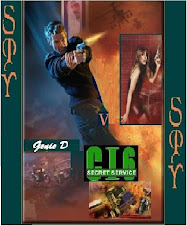
I have sold my spy series to a Russian TV company a few years back mainly because my main character is a Russian Intelligence Agent. The company who bought it decided they loved the threads of humor weaving through the main stories. I was happy to oblige.

My cousin who is a animation director wants to do something on the lines of AVATAR, and has asked me for some Scifi books. I sent them to him. It would be fab if he took one but my hopes are not riding on it.

What am I writing now? I have about 22 possibilities in the works. My problem is I start a new novel and write a dozen pages and then put it to one side because something new in the ideas dept has come up. So I have 22 books already started, none of them completed. I should smack myself up the head and start completing them.

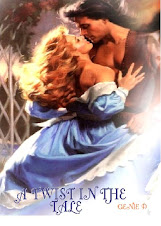
I started my first book "Eternal Love" in 1995. I got about 11 rejections before Rowe publishers took it. Though I had to do a few corrections first. From 2000 I became the next Barbara Cartland - meaning I churned out between 6-8 books a year until 2004, then I kinda slowed down to 3 books. Actually I sell more Scifi and fantasy these days then Romances. All my novels kind of have a thread of humor running through them.

Almost all the Romances and my thrillers also have something unique. I actually visit the places I write about personally so I do not make a mistake. After all if a reader finds one of my romances is about her town or country - she isn't going to be too amused if the places don't match or the roads are wrong. I do try my best to be authentic. My V novel is also authentic. All the places the Resistance fighters went to are exact.

Now you are wondering how I can afford to travel. Well I work part time and save my $$'s to travel with.

But I digress ....

I started this blog to connect with friends who write and those who have similar interests like writing novels or basically like to write period. Sharing is half the fun and making friends the other half.